Quick facts
Use these quick facts to compare Wulong Three Natural Bridges with nearby stops. A realistic Wulong Three Natural Bridges plan should allow for local terrain, queues and current operating notices.
- Chinese name
- 武隆天生三桥
- Visitor-area location
- Xiannushan Town, Wulong District
- Nearest intercity rail
- Wulong railway arrival followed by a transfer to the Xiannüshan visitor area
- Entry
- Ticketed scenic area with managed internal transport; check the current package and reservation rules
- Visit duration
- 3-4 hours inside the scenic area; allow a full day from central Chongqing
- Best time
- An early dry weekday with clear transport connections
- Suitable for
- Karst landscapes, photography and active visitors comfortable with stairs
Is Wulong Three Natural Bridges worth visiting?
Recommendation: Recommended for active visitors who prioritise karst scenery and can give the excursion a full day. Skip it if steep paths, stairs or a long rail-and-road transfer would dominate your short Chongqing visit.
What to see
The most useful Wulong Three Natural Bridges visit focuses on a few distinctive features rather than every available stop. At Wulong Three Natural Bridges, prioritise the experiences below.
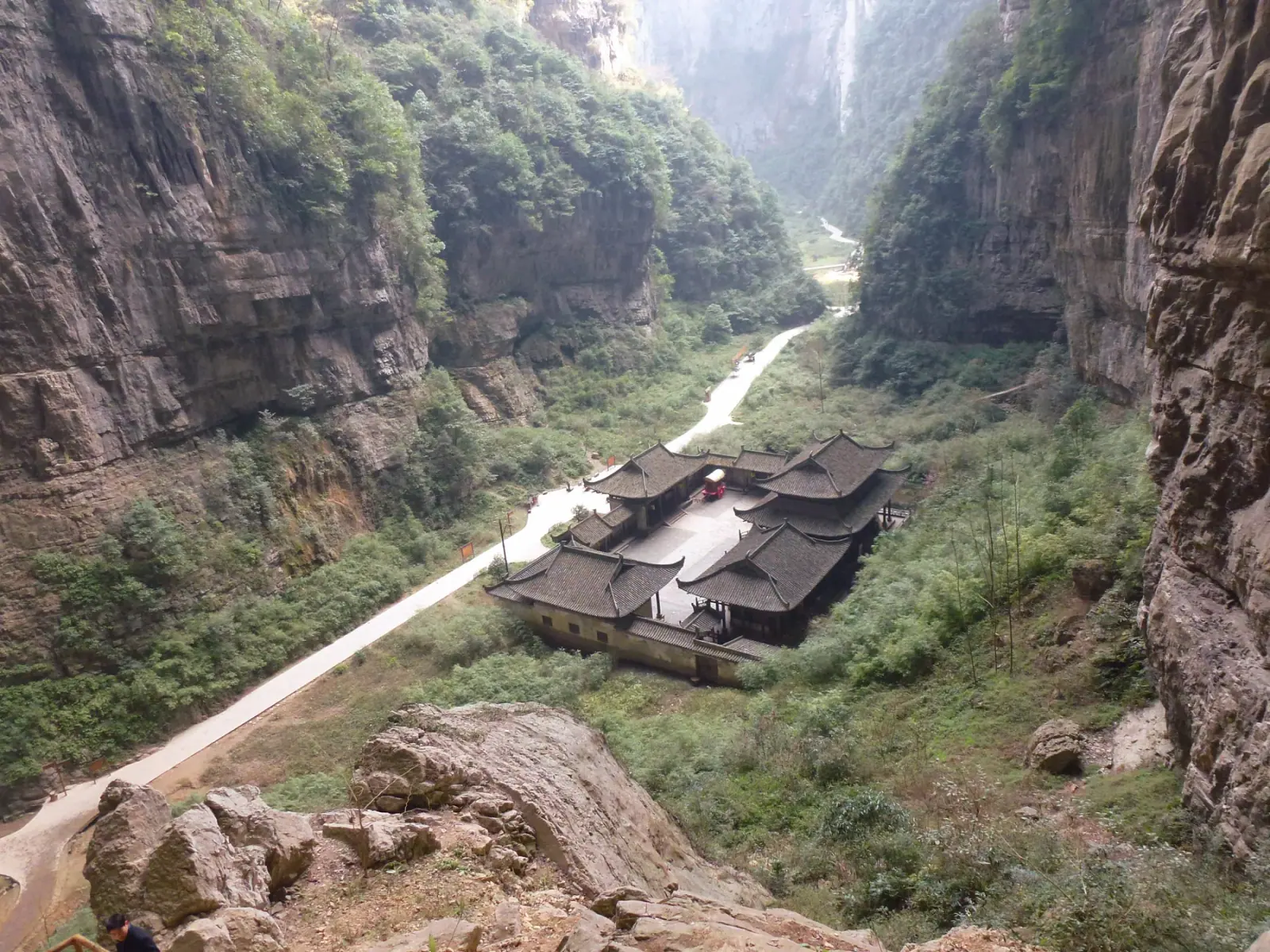
The route descends into a karst valley beneath three large natural stone bridges. The scale is easiest to understand from the lower path, not from a single entrance viewpoint.
Tianlong, Qinglong and Heilong bridges form the core sequence. Forest, cliff walls, waterfalls and the Tianfu Post House setting create a continuous walk rather than three isolated photo stops.
The Three Natural Bridges belong to the wider South China Karst World Heritage context. Keep the visit focused on this managed route unless you have separately planned another Wulong attraction.
Best time to go
Timing can change the experience at Wulong Three Natural Bridges. Use the guidance below when fitting Wulong Three Natural Bridges into a morning, afternoon or evening route.
Take an early connection from Chongqing so delays in the railway-to-visitor-centre transfer do not force a rushed last section.
A dry day is easier for the long downhill route, stone surfaces and return transfers. Rain can make the landscape atmospheric but increases slip risk and slows photography.
Weekdays are preferable because viewing platforms and internal transport queues can concentrate visitors. Check weather, closures and final entry time on the visit day.
Getting there
The best way to reach Wulong Three Natural Bridges depends on your previous stop and the day's traffic. Save Wulong Three Natural Bridges in both English and Chinese before leaving.
Train plus scenic-area transfer
Travel from Chongqing to the current Wulong rail arrival, then use a verified bus, taxi or booked transfer to the Xiannüshan visitor centre. The scenic entrance is not beside the railway station.
Organised day trip
A tour can remove the first- and last-kilometre problem. Confirm whether the quoted price includes admission, mandatory internal transport, meals and the return departure time.
Private car or driver
This is practical for a group or anyone combining another Wulong site. Set 武隆天生三桥游客中心 as the destination and agree on the return meeting point.
Local bus or taxi
Local transfer routes and schedules change. Verify the current Xiannüshan visitor-centre service on arrival instead of following an old route number.
The day requires an intercity journey plus a road transfer to the Xiannüshan visitor centre and managed movement inside the scenic area. Confirm all three stages before leaving Chongqing.
From Chongqing's high-speed railway stations
Use these arrival diagrams as a planning outline, then confirm the exact platform, transfer and exit in a live transit app. Chongqing North and Chongqing West are large stations, so allow time between the train platform and the metro.
Chongqing North Railway Station
重庆北站
- Book a current service for Wulong
- Carry the passport used for the rail booking
- Transfer onward to the Xiannüshan visitor centre
- Complete the scenic-area ticket and internal-transport check
Rail services and arrival stations can change with network updates. Use the exact station printed on the ticket and verify the onward transfer before departure.
Chongqing East Railway Station
重庆东站
- Check whether the current timetable offers a useful Wulong service
- Allow time for the new station layout
- Meet the pre-checked Wulong transfer
- Keep a buffer before the return train
Do not assume every Wulong-bound train uses the same Chongqing terminal. Compare the current 12306 result with your hotel transfer time.
Suggested route
This sequence keeps a Wulong Three Natural Bridges visit practical and reduces unnecessary backtracking. Adjust the Wulong Three Natural Bridges route if weather, queues or temporary controls change.
Best photo spots
For clearer Wulong Three Natural Bridges photos, choose the viewpoint and time of day before joining the busiest visitor flow.
- The lower path where a person or the Tianfu Post House gives the arch a sense of scale
- Openings that frame forest and cliff layers beneath each bridge
- Wide compositions from signed platforms without blocking the narrow walking route
Related Chongqing guides
Use these Chongqing guides to plan the city days before or after this full-day excursion.
Common mistakes
Most problems during a Wulong Three Natural Bridges visit come from outdated navigation details, unrealistic timing or choosing the wrong arrival point.
- Treating the Wulong railway station as the scenic entrance
- Adding another Wulong attraction without checking transfer and closing times
- Booking the last practical train home with no buffer
- Wearing smooth shoes on wet steps
- Assuming every ticket package includes the same internal transport
First-time visitor tips
These Wulong Three Natural Bridges tips are designed for international visitors using local metro, taxi and navigation apps for the first time.
- Save 武隆天生三桥游客中心 in Chinese
- Carry the passport used for rail and ticket reservations
- Pack light because the route includes stairs and sustained walking
- Keep weather protection and drinking water accessible
- Photograph posted return-transport information before starting the descent
Frequently asked questions
Check these Wulong Three Natural Bridges answers before finalising tickets, transport and visit duration.
Are Wulong Three Natural Bridges worth a day trip?
Yes for visitors who prioritise karst scenery and can manage a long transfer plus a stair-heavy walking route. It is not a quick add-on to central Chongqing.
How long do you need at Wulong Three Natural Bridges?
Allow roughly three to four hours for the managed scenic route and a full day when travelling from central Chongqing.
Can you take a train from Chongqing to Wulong?
Yes, but the rail arrival is only one stage. You still need a current road transfer to the Xiannüshan visitor centre and enough time for the return connection.
Is the Three Natural Bridges walk difficult?
The route includes a substantial descent, stairs, uneven or wet surfaces and managed exit transport. Visitors with limited mobility should check the current accessibility arrangements directly.
Can you combine Three Natural Bridges with Longshuixia Gap?
Some visitors combine them, but the extra transfer and walking can make the day rushed. Add it only when the current ticket, transport and closing times are confirmed.
What should you check before a Wulong day trip?
Check the exact rail stations, onward visitor-centre transfer, weather, admission package, internal transport and latest return connection.
Plan your visit
A well-timed Wulong Three Natural Bridges visit starts with current transport and operating details. Use the source notes and nearby links above to place Wulong Three Natural Bridges into a route that matches your available time, then recheck variable information before leaving for Wulong Three Natural Bridges.
Variable details reviewed 2026-08-12. Still confirm these before visiting: visit-day admission package, internal transport inclusions, last entry time, rail-to-visitor-centre transfer timetable, weather closures.