Quick facts
Use these quick facts to compare Dazu Rock Carvings with nearby stops. A realistic Dazu Rock Carvings plan should allow for local terrain, queues and current operating notices.
- Chinese name
- 大足石刻
- Main visitor site
- Baodingshan Rock Carvings, Dazu District
- Nearest practical rail arrival
- Dazu South Railway Station, followed by a road transfer
- Entry
- Ticketed heritage attraction; confirm current ticket, reservation and site-combination rules before departure
- Visit duration
- 2-3 hours at Baodingshan; allow a full day from central Chongqing
- Best time
- A dry weekday morning with comfortable walking weather
- Suitable for
- History, religious art, heritage photography and travellers with a spare day
Is Dazu Rock Carvings worth visiting?
Recommendation: Recommended for visitors interested in Chinese religious art, sculpture and World Heritage sites. Skip it on a one- or two-day city break unless it is a priority, because the Baodingshan transfer makes this a full-day excursion.
What to see
The most useful Dazu Rock Carvings visit focuses on a few distinctive features rather than every available stop. At Dazu Rock Carvings, prioritise the experiences below.
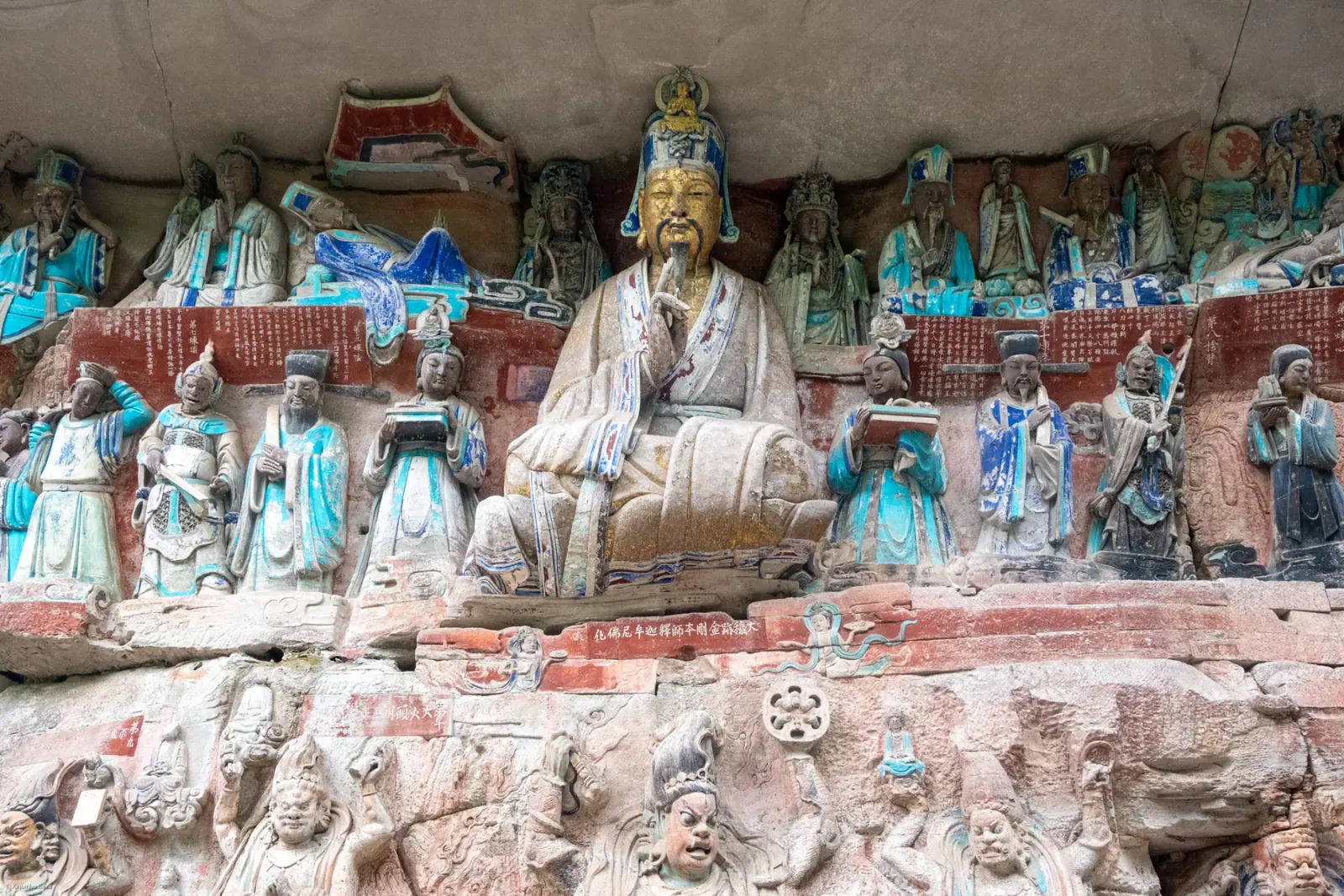
Baodingshan is the most practical first stop for an independent day trip. Its cliff sequence presents large narrative carvings in a route that is easier to understand than trying to sample every Dazu site.
Look at the relationship between figures, inscriptions and the rock face rather than treating each niche as an isolated statue. The site is valued for the way Buddhist, Confucian and Taoist themes appear across the wider Dazu group.
Beishan is a separate site and requires more time and transport. Add it only after confirming the current combined-ticket and transfer arrangements; Baodingshan alone is enough for most first visits.
Best time to go
Timing can change the experience at Dazu Rock Carvings. Use the guidance below when fitting Dazu Rock Carvings into a morning, afternoon or evening route.
Start early because the road or rail transfer from central Chongqing is the largest variable in the day. A weekday reduces pressure at the narrow viewing points.
Spring and autumn usually make the outdoor walking route easier. Summer heat and heavy rain can make a heritage visit slower even when the carved sections are partly sheltered.
Check current conservation closures and admission notices shortly before leaving. Individual areas can be restricted without the entire Dazu Rock Carvings complex closing.
Getting there
The best way to reach Dazu Rock Carvings depends on your previous stop and the day's traffic. Save Dazu Rock Carvings in both English and Chinese before leaving.
High-speed train plus road transfer
Search for a train serving Dazu South Railway Station, then arrange the onward road journey to the Baodingshan visitor area. Confirm the current timetable and local transfer before buying a non-changeable ticket.
Intercity coach or organised day trip
A direct coach or organised transfer can reduce connections, but departure points and inclusions change. Confirm whether the service reaches Baodingshan itself or only Dazu urban area.
Taxi or private car
A door-to-door car is the simplest option for a group, especially if combining Baodingshan and Beishan. Agree on waiting time, return arrangements and the exact Chinese destination 大足石刻宝顶山景区.
Local bus
Local buses may connect Dazu urban area with the scenic zone, but frequency and stop locations are time-sensitive. Use current local navigation rather than a static route number.
Baodingshan is outside the central Chongqing visitor route. Verify both outbound and return transport before departure, and keep enough buffer for the station-to-scenic-area road transfer.
From Chongqing's high-speed railway stations
Use these arrival diagrams as a planning outline, then confirm the exact platform, transfer and exit in a live transit app. Chongqing North and Chongqing West are large stations, so allow time between the train platform and the metro.
Chongqing North Railway Station
重庆北站
- Check whether a useful service runs to Dazu South
- Allow time for the large railway concourse
- Continue by a pre-checked local road transfer
- Enter through the Baodingshan visitor area
Not every departure pattern is equally convenient. Compare total door-to-door time with a private or organised road transfer before booking.
Chongqing West Railway Station
重庆西站
- Search the current Dazu South timetable
- Keep the original passport used for booking ready
- Meet the onward local transfer
- Allow a buffer before the last return train
The railway leg can be short while the first- and last-kilometre transfers remain long. Do not plan the return around the final possible connection.
Suggested route
This sequence keeps a Dazu Rock Carvings visit practical and reduces unnecessary backtracking. Adjust the Dazu Rock Carvings route if weather, queues or temporary controls change.
Best photo spots
For clearer Dazu Rock Carvings photos, choose the viewpoint and time of day before joining the busiest visitor flow.
- Wide sections where the narrative carving and surrounding cliff can be shown together
- Oblique angles that reveal depth without crossing barriers
- Detail views only where photography is permitted and without flash
Related Chongqing guides
Use these Chongqing guides to plan the city days before or after this full-day excursion.
Common mistakes
Most problems during a Dazu Rock Carvings visit come from outdated navigation details, unrealistic timing or choosing the wrong arrival point.
- Assuming Dazu is one compact attraction rather than a group of separate carving sites
- Trying to combine Baodingshan and Beishan without confirmed transport
- Booking a return connection with no delay buffer
- Using flash, touching the rock or crossing conservation barriers
- Relying on an old ticket price or coach timetable
First-time visitor tips
These Dazu Rock Carvings tips are designed for international visitors using local metro, taxi and navigation apps for the first time.
- Save 大足石刻宝顶山景区, not only 大足, in the map app
- Carry the passport used for train or ticket reservations
- Bring water and shoes suited to steps and outdoor paths
- Use an official or staffed channel to confirm which areas are open
- Keep the final city evening free instead of adding a timed central attraction
Frequently asked questions
Check these Dazu Rock Carvings answers before finalising tickets, transport and visit duration.
Are the Dazu Rock Carvings worth a day trip from Chongqing?
Yes for visitors interested in heritage, sculpture and religious art. The transfer makes less sense when you have only one or two days for central Chongqing.
Which Dazu Rock Carvings site should first-time visitors choose?
Baodingshan is the most practical primary site for a first visit. Beishan is separate and should be added only when time and transport are confirmed.
How long do you need at the Dazu Rock Carvings?
Allow roughly two to three hours for Baodingshan itself and a full day when travelling from central Chongqing.
Can you take a train to the Dazu Rock Carvings?
A train can take you to Dazu South Railway Station, but you still need a road transfer to Baodingshan. Check the complete journey before buying tickets.
Can you photograph the Dazu Rock Carvings?
Follow the posted conservation rules. Avoid flash, tripods in narrow areas, touching the carvings or photographing any section marked as restricted.
Do Dazu Rock Carvings tickets include every site?
Ticket combinations and reservation rules can change. Confirm whether your current ticket covers Baodingshan, Beishan or another area before paying.
Plan your visit
A well-timed Dazu Rock Carvings visit starts with current transport and operating details. Use the source notes and nearby links above to place Dazu Rock Carvings into a route that matches your available time, then recheck variable information before leaving for Dazu Rock Carvings.
Variable details reviewed 2026-08-12. Still confirm these before visiting: visit-day admission price, reservation requirement, site-combination ticket, local transfer timetable, temporary conservation closures.